
Drive Sustainable Business Growth By Applying This Growth CX Framework
A Practical CX Growth Framework to Fuel Sustainable Growth — A Guide for Startups & Entrepreneurs
In a crowded market, a clear customer experience (CX) framework isn’t optional — it’s how startups build repeatable, sustainable growth. This guide breaks down what a CX growth framework looks like, why it matters, and how to design, implement, and measure one that actually moves the needle. You’ll learn how structured CX work boosts retention, sparks referrals, and aligns your product and business goals with what customers truly want. Expect practical steps, key metrics, and real examples you can adapt to your business.
What Is a Customer Experience Strategy Framework and Why Does It Matter?
A CX growth framework is a deliberate set of practices and tools that help teams shape every customer interaction. It brings together journey mapping, feedback loops, and clear performance metrics so you can make consistent, customer-centered choices. The real value is alignment: when customer needs and business objectives line up, growth and loyalty follow. Startups that treat CX as strategic rather than ad hoc see better retention, stronger referrals, and more predictable outcomes.
Experts highlight that a formal CX framework keeps teams focused on the core marketing goals: retention, loyalty, and satisfaction.
Strategic Framework for CX Management & Customer Value
Focusing on customer retention, loyalty, and satisfaction as the primary marketing goals—and on customer experience management to increase overall customer value.
Managing customer experience and relationships: A strategic framework, D Peppers, 2016
Defining Customer Experience and Its Impact on Business Growth
Customer experience is the sum of perceptions people form from every interaction with your brand — product, support, marketing, and beyond. Those perceptions shape behavior: satisfied customers stay longer, spend more, and tell others. Startups that create emotional connections through consistently thoughtful experiences stand out in competitive markets and convert goodwill into revenue.
How Structured CX Frameworks Improve Customer Retention and Referrals
A structured CX framework turns guesswork into repeatable processes. Feedback loops reveal real pain points, journey maps expose friction, and targeted fixes reduce churn. When you close the loop on feedback and visibly improve the product or service, customers feel heard — and they’re far more likely to stay and refer others.
How to Design an Effective CX Growth Framework for Startups
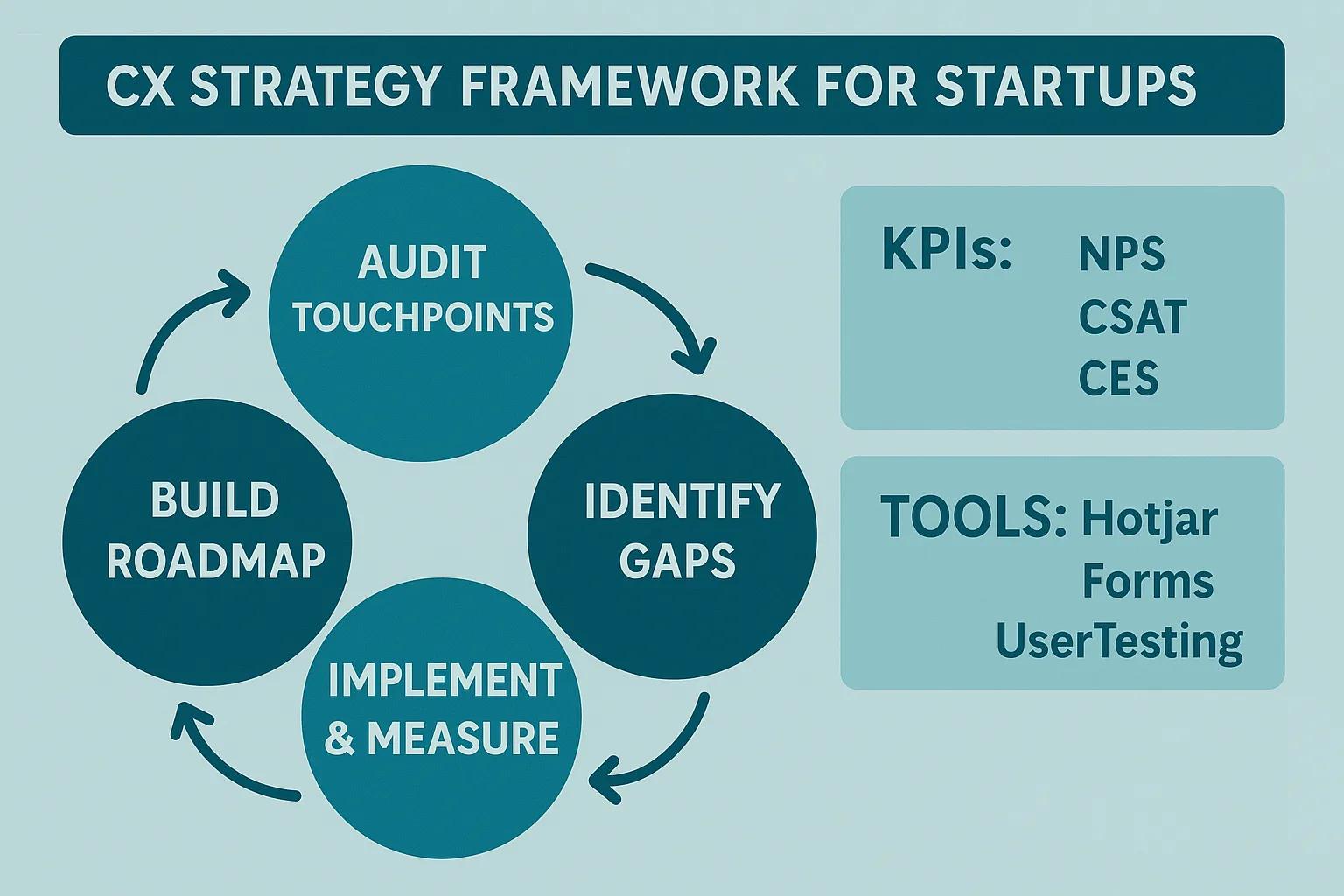
Designing a CX framework for a startup starts with a clear audit: map current touchpoints, surface gaps, and prioritize changes that support your growth goals. From there, build a practical roadmap that sequences quick wins and longer-term investments so improvements are measurable and sustainable.
Key Components of a Practical CX Growth Framework
A usable CX framework rests on a few non-negotiables:
- Customer Journey Mapping: Break down the customer lifecycle to spot critical moments that shape perception.
- Feedback Mechanisms: Set up channels to collect timely, actionable customer input.
- Performance Metrics: Define KPIs so you can track whether CX changes actually affect retention and value.
These elements work together to create a repeatable process for improving satisfaction and supporting growth.
Aligning CX Goals with Startup Growth Objectives
To link CX to growth, identify the experience gaps that most directly affect retention and revenue. Prioritize fixes that improve those moments, then embed CX responsibilities across teams so customer focus becomes part of how you operate — not an afterthought.
What Are the Best Practices for Implementing CX Frameworks in Service-Based Businesses?
Service businesses succeed on consistent delivery. Best practices emphasize a closed feedback loop, solutions designed around customer needs, and continuous measurement against clear targets.
Recent research shows the service sector faces particular CX hurdles — from tech integration to employee engagement — and requires tailored strategies to address them.
CX Management Challenges & Strategies for Service Industry
The service industry faces pressure to improve customer experience amid rapid tech change, rising expectations, and intense competition. This study uses qualitative case research to identify four main challenges: technological integration, employee engagement, personalization, and operational limits. It recommends incremental tech adoption with focused training, employee engagement programs, privacy-aware personalization, and flexible operational models to meet demand.
Challenges and Strategies for Enhancing Customer Experience in the Service Industry: A Case Study Approach, 2024
Step-by-Step CX Framework Implementation Guide for Entrepreneurs
Follow these practical steps to roll out a CX framework:
- Identify Constraints: Map the systems or processes that block better customer outcomes.
- Utilize a Structured Framework: Adopt a proven framework that aligns with your size and goals.
- Leverage Customer Insights: Use real customer data to prioritize and validate changes.
This sequence helps you make targeted improvements and demonstrate early wins.
Overcoming Common Challenges in CX Implementation
Resistance to change and limited resources are common. Counter both by building a feedback-friendly culture, celebrating small wins, and training teams on the business impact of CX improvements. Community and cross-functional collaboration turn friction into momentum.
How to Measure CX Success: Essential Metrics and KPIs for Sustainable Growth
Measuring CX lets you know what’s working. Core metrics like satisfaction scores, NPS, and retention rates reveal how customers feel and act — and help you connect CX activities to revenue.
Tracking Customer Retention and Loyalty Metrics
Track a small set of high-impact metrics:
- Net Promoter Score (NPS): A snapshot of loyalty and referral likelihood.
- Customer Satisfaction Score (CSAT): How satisfied customers are with specific interactions.
- Customer Effort Score (CES): How easy it is for customers to get things done with you.
Regularly review these signals to spot trends and prioritize fixes that move the needle on loyalty.
Using Data to Optimize CX Strategies Continuously
Continuous CX improvement depends on disciplined data collection and analysis. Use surveys, reviews, and behavioral data to detect patterns, test hypotheses, and iterate. Make the feedback loop visible across teams so insights translate into product and service changes.
Which Tools and Technologies Enhance CX Strategy Execution for Startups?
The right tools make execution practical: they help you map journeys, collect feedback, and measure impact without heavy overhead.
Top CX Tools for Customer Journey Mapping and Feedback
Startups can get useful signals quickly with tools like:
- Hotjar: Visualizes user behavior with heatmaps and session recordings.
- Google Forms: Simple, low-cost surveys for direct customer feedback.
- UserTesting: Real user sessions to surface usability issues and sentiment.
These platforms help you turn qualitative and quantitative signals into concrete action.
Leveraging Digital Platforms to Boost Customer Experience
Digital touchpoints are often the experience. Simplify flows, use AI where it genuinely personalizes, and ensure interfaces are intuitive. Small reductions in friction at key moments can dramatically improve satisfaction and conversion.
What Are Real-World CX Success Stories Demonstrating Sustainable Business Growth?
Case studies show how deliberate CX work transforms businesses. When startups close feedback loops and act on insights, retention and referrals rise—and so does predictable revenue.
Case Studies of Startups Increasing Retention and Referrals with CX Frameworks
Many startups have posted measurable gains after introducing structured CX practices. For example, a tech company that formalized a feedback loop and prioritized fixes saw retention climb meaningfully within six months by resolving top customer pain points and improving service delivery.
Lessons Learned from CX Coaching Programs by Ivis Mas
Ivis Mas’ coaching distills practical CX habits: put the customer at the center of decisions, use feedback as your north star, and build community support to scale improvements. Armed with these lessons, startups can implement frameworks that drive lasting growth.
**


Comments +